Hey history buffs and travel enthusiasts! I’ve always found myself completely captivated by the deep, winding roots of European royalty, and let me tell you, the story of the Czech kings is an absolute goldmine of drama, power, and unexpected twists.
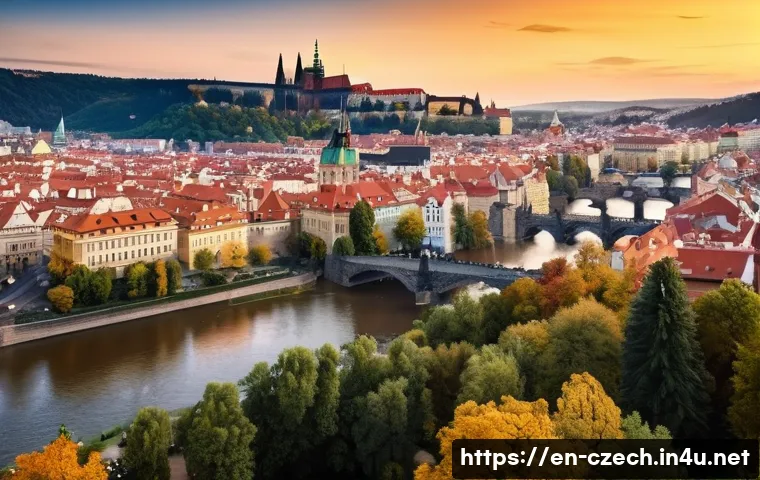
From the legendary Přemyslid dynasty, who practically built the nation from scratch, to the magnificent Luxembourgs whose influence stretched across the Holy Roman Empire, these rulers weren’t just names in dusty old books—they were trailblazers, warriors, and patrons of culture who sculpted the very identity of a vibrant land we know today.
If you’ve ever walked the cobbled streets of Prague and felt that undeniable echo of history, you’re in for a treat as we unravel the fascinating tapestry of their reigns.
Let’s dive in and truly get to know these incredible figures!
The Ancient Roots: Forging a Nation from Myth and Might
It’s truly incredible to think back to the very beginnings of Bohemia, a time when the lines between legend and history were delightfully blurred. When I first started digging into this, I was struck by how much of Czech identity traces back to those early rulers, particularly the Přemyslid dynasty.
They weren’t just figures on a timeline; they were literally laying the groundwork for a future kingdom, often with a sword in one hand and a cross in the other.
Imagine trying to unify disparate Slavic tribes, navigate the powerful Holy Roman Empire, and introduce Christianity all at once! It must have been an absolute whirlwind of political maneuvering and fierce battles.
This early period, stretching from the 9th century to the early 14th century, saw the Bohemian lands transform from a duchy into a recognized hereditary kingdom, securing its place on the European stage.
The Přemyslids, often starting as mere dukes, slowly but surely consolidated power, expanded their territories, and began to shape a distinct Bohemian culture.
They faced immense challenges, not least from their powerful German neighbors, yet they managed to maintain a remarkable degree of sovereignty. This foundational era fascinates me because it’s where you see the very first sparks of a national consciousness, fueled by these pioneering rulers.
From Local Chieftains to Christian Rulers
The journey from local chieftains to Christian rulers was anything but smooth, packed with intrigue and dramatic shifts. You know, when I visited some of the older sites around Prague, like the areas connected to the early Přemyslids, I couldn’t help but picture the intense conversion efforts.
Figures like Prince Bořivoj I and his wife, Saint Ludmila, were absolutely pivotal in bringing Christianity to Bohemia, even though it wasn’t always a peaceful process.
Ludmila, in particular, seems like a powerhouse – a diplomat and a devoted grandmother who deeply influenced Saint Wenceslas, the future patron saint.
It’s a story of powerful women shaping history, which I always find so inspiring. Their commitment, despite internal family feuds and external pressures, really solidified Bohemia’s ties with Western Europe and set the cultural trajectory for centuries to come.
The establishment of bishoprics, like the one in Prague in 973, wasn’t just a religious act; it was a political statement, asserting a degree of independence and solidifying the nation’s place within the broader European Christian world.
This period reminds me that even the grandest empires start with foundational, often turbulent, steps.
The Golden Bull and Hereditary Power
Talk about a game-changer! The Golden Bull of Sicily in 1212 was a truly monumental moment for Bohemia, thanks to the tenacity of Přemysl Ottokar I. It officially elevated Bohemia to a hereditary kingdom, a status that had previously been more ad-hoc.
This wasn’t just a fancy title; it was a formal acknowledgment from the Holy Roman Emperor, granting Bohemian kings significant autonomy and making them one of the seven prince-electors of the Empire.
Imagine the sigh of relief and the feeling of legitimacy that must have swept through the court after centuries of navigating precarious relationships with their powerful neighbors!
When I think about it, this document fundamentally altered the course of Bohemian history, providing stability and a clear line of succession that allowed the kingdom to flourish.
It enabled rulers like Ottokar II, often called the “Iron and Golden King,” to expand Bohemia’s influence dramatically, even reaching the Adriatic Sea at one point.
This really highlights how a single, well-played diplomatic move can have repercussions that echo through history for generations, solidifying power and shaping national destiny.
Prague’s Zenith: Charles IV and the Luxembourg Legacy
If there’s one period that absolutely radiates grandeur and ambition in Czech history, it has to be the reign of Charles IV. Honestly, when you walk through Prague today, you can literally feel his presence everywhere, from Charles Bridge to Charles University.
It’s like he envisioned this magnificent city, rolled up his sleeves, and just *made* it happen. The man was a true visionary, not just for Bohemia, but for the entire Holy Roman Empire, where he was also crowned Emperor.
Being of the Luxembourg dynasty, he brought a cosmopolitan outlook that transformed Prague into a cultural and intellectual powerhouse, rivaling Paris and Rome.
I remember standing on Charles Bridge, gazing at Prague Castle, and thinking about how one person could orchestrate such a monumental artistic and architectural blossoming.
His dedication to education, art, and administrative reform truly solidified Bohemia’s “Golden Age,” making it a beacon in Central Europe. He literally rebuilt Prague Castle, founded the New Town (Nové Město), and laid the cornerstone for St.
Vitus Cathedral. What a legacy!
An Emperor’s Vision for Bohemia
Charles IV’s vision for Bohemia was nothing short of breathtaking, and it really feels like he poured his heart and soul into making Prague the center of his universe.
He wasn’t just a ruler; he was an architect, a scholar, and a patron of the arts, fluent in multiple languages, which must have given him such an advantage in diplomacy.
He saw Prague not just as a capital, but as the heart of his empire, and he spared no expense in elevating it to that status. I mean, founding Charles University in 1348 – the first university in Central Europe – was a monumental step that created a hub for learning and administration.
It wasn’t just about buildings; it was about cultivating an intellectual atmosphere that drew scholars and artists from all corners of Europe. His personal involvement in projects like Karlštejn Castle, built to house the imperial crown jewels and holy relics, speaks volumes about his meticulous nature and his desire to create lasting symbols of his reign and Bohemia’s importance.
It’s genuinely inspiring to see how one person’s dedication can so profoundly shape the destiny of a nation and its cultural identity.
Art, Architecture, and a Flourishing Culture
Under Charles IV, Bohemia experienced an unparalleled flourishing of art and architecture, transforming Prague into a Gothic jewel. Walking through the city, you can’t help but be in awe of the sheer beauty and intricate details of structures like St.
Vitus Cathedral and Karlštejn Castle, which he personally oversaw the construction and decoration of. It’s not just the scale, but the *style* that captivates me; it was elegant, sophisticated, and distinctly Bohemian.
The workshops associated with his court, like those of the Parler family, were incredibly influential across Europe. Even under his son Wenceslas IV, despite the political turmoil, Bohemian art continued to thrive, evolving into what’s known as “The Beautiful Style” – a testament to the deep roots Charles had established.
For me, it shows how a strong cultural foundation can endure even through challenging times, leaving behind an incredible legacy that we still cherish today.
Turbulence and Transformation: The Hussite Era
Just when you think things are settling down, history throws another curveball, and for Bohemia, that curveball was the Hussite movement. It’s a period that often makes me pause and reflect on how deeply intertwined faith, politics, and national identity can become.
The execution of Jan Hus in 1415 didn’t just spark a religious debate; it ignited a full-blown revolution that shook the very foundations of the Bohemian kingdom and had ripples across Europe.
I’ve always been fascinated by how a desire for religious reform could empower ordinary people to challenge established authority so profoundly. The Hussite Wars weren’t just about theology; they were about national pride, social justice, and a fierce resistance against perceived foreign interference.
It’s a powerful reminder that sometimes, the most significant changes come from the most unexpected places and people.
The Fiery Legacy of Jan Hus
The story of Jan Hus and his fiery legacy is one that resonates deeply when you look at the Czech spirit. He wasn’t just a preacher; he was a university scholar whose critiques of church corruption struck a chord with both the Czech-speaking masses and an international audience.
It’s heartbreaking to think about how his quest for reform ultimately led to his execution, but his death, far from silencing his ideas, became a rallying cry for the Hussite movement.
When I visited Bethlehem Chapel in Prague, where Hus preached, I could almost feel the energy of his sermons, imagining the crowds hanging on his every word.
This period reminds me that conviction, even in the face of immense power, can light a flame that reshapes an entire nation. The Hussites championed communion in both kinds and the use of the vernacular in liturgy, which were radical ideas at the time and fostered a strong sense of Czech identity and dissent against external pressures.
Wars of Faith and National Identity
The Hussite Wars were a truly tumultuous and transformative chapter, a series of conflicts that spanned over a decade and carved a new path for Bohemia.
It was a period where faith became a driving force for monumental change, and the Hussite armies, employing innovative tactics like wagon forts, repeatedly defied much larger crusading forces from across Europe.
The internal divisions within the Hussite movement, between the more moderate Utraquists and the radical Taborites, eventually led to their downfall, but not before they had indelibly stamped their mark on history.
I find it so compelling how these wars forged a unique national identity, where Czech culture and language came to the forefront of social life. It also led to the election of George of Poděbrady, the only Czech king who wasn’t a member of a ruling dynasty, a testament to the changing power dynamics after the wars.
The impact of these wars on the Bohemian throne and its relationship with the Holy Roman Empire was profound, demonstrating Bohemia’s resilience and its struggle for self-determination.
The Shifting Sands of Power: Later Dynasties and Decline
After the intense drama of the Hussite Wars, the Bohemian throne found itself on increasingly shifting sands. It was a period marked by the rise of new dynasties, each grappling with the complex legacy of the past and the ever-present pressures from powerful European neighbors.
For me, this era often feels like a gradual cooling after a fiery peak, where the vibrant independence of earlier centuries began to yield to broader imperial alignments.
You see the Jagiellonian dynasty step in, and then, eventually, the looming shadow of the Habsburgs, which fundamentally reshaped Bohemia’s destiny for centuries to come.
It’s a poignant reminder that even the most glorious kingdoms can find their autonomy slowly eroded by larger political currents.
The Jagiellonians and the Diminishing Crown
The Jagiellonian dynasty, arriving in the late 15th century, brought Bohemia and Hungary under a single crown, but it was a period where royal authority in Bohemia began to noticeably diminish.
When I think about Vladislaus II and his son Louis, who spent more time in Hungary than in Bohemia, it’s clear that the focus shifted away from Prague.
This really opened the door for the Bohemian Estates and Catholic lords to wield greater influence, gradually weakening the central power of the monarch.
It’s a fascinating example of how a seemingly advantageous dynastic union can, ironically, lead to a loss of local control and prestige. The religious struggles continued, too, between the Hussite Church and the Catholic minority, further complicating the political landscape.
This era serves as a stark reminder that simply inheriting a throne doesn’t guarantee enduring power, especially when local factions are eager to assert their own will.
The Habsburg Shadow and the End of Independence
The ultimate chapter in Bohemia’s independent monarchy arrived with the Habsburg dynasty in 1526, marking a profound shift that would last for nearly 300 years.
Ferdinand I, by marrying Louis II’s sister Anne, laid claim to the Bohemian throne, making significant concessions to the magnates to secure his election.
However, as the Habsburgs consolidated their vast empire, Bohemia’s unique status slowly but surely began to be absorbed into a larger whole. I’ve always felt a sense of melancholy looking at this period, as the fierce independence and vibrant cultural life fostered by earlier kings gradually gave way to imperial centralization.
The defeat of the Bohemian Estates at the Battle of White Mountain in 1620 was a particularly brutal turning point, effectively ending Bohemia’s independence and leading to enforced re-Catholicization and the transfer of key offices to Vienna.
It’s a powerful and somewhat heartbreaking conclusion to centuries of a unique royal lineage, highlighting the enduring impact of larger geopolitical forces.
Royal Residences: Castles That Whisper Tales of Kings
If you’re anything like me, you can’t help but feel a thrill when you stand before an ancient castle, imagining the lives that unfolded within its walls.
The Czech kings certainly left behind an incredible architectural legacy, with countless castles scattered across Bohemia, each telling a piece of their story.
From imposing fortresses built for defense to opulent palaces designed for prestige, these structures are more than just old buildings; they’re tangible links to the past, filled with echoes of power, intrigue, and daily life.
I’ve always felt that exploring these castles is the best way to truly connect with the history of the monarchs who once called them home.
Prague Castle: The Enduring Heart of Bohemia
Prague Castle isn’t just a castle; it’s a sprawling complex that has served as the seat of Bohemian dukes and kings for centuries, and to me, it’s the absolute beating heart of the Czech lands.
When you wander through its courtyards and halls, you’re literally walking through layers of history. Charles IV, in particular, undertook massive building campaigns to rebuild and glorify it, making it the central hub of his empire.
It’s where the Bohemian Crown Jewels, including the iconic Crown of Saint Wenceslas, are kept, symbolizing centuries of sovereignty and national identity.
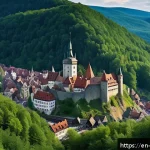
I remember seeing the St. Vitus Cathedral, nestled within the castle complex, and being utterly awestruck by its Gothic grandeur. It really drives home the importance of this place as not just a royal residence, but a powerful symbol of the nation itself, continuously evolving yet steadfastly rooted in its past.
Karlštejn and Beyond: Fortresses of Power and Prestige
Beyond Prague Castle, the Czech kings commissioned an array of other magnificent fortresses, each with its own story. Karlštejn Castle, for instance, founded by Charles IV in 1348, stands as a breathtaking testament to his vision.
It wasn’t just a country residence; it was specifically designed as a secure repository for the Imperial Regalia, the Bohemian Crown Jewels, and his vast collection of holy relics.
When you visit Karlštejn, especially the Chapel of the Holy Cross with its stunning, gem-encrusted interior, you truly get a sense of the reverence and wealth that defined Charles IV’s reign.
But it wasn’t just about grand statements. Castles like Křivoklát, rebuilt by King Wenceslas IV, or the earlier Vrškamýk, tell tales of royal hunts, political struggles, and changing architectural styles.
Each stone in these ancient walls seems to whisper stories of the monarchs who walked their corridors, making them incredibly potent sites for anyone keen to delve deeper into this rich history.
The Crown Jewels: Symbols of Sovereignty and Spirit
There’s something incredibly mesmerizing about royal crown jewels, isn’t there? They’re not just sparkly adornments; they’re potent symbols, embodying the very essence of a nation’s history, its struggles, and its triumphs.
For the Czech lands, the Crown of Saint Wenceslas holds a particularly sacred and powerful significance. When I think about how these precious objects have endured centuries of conflict and change, it truly underscores their enduring meaning to the Czech people.
They are a tangible link to the past, reminding everyone of the long lineage of rulers and the unwavering spirit of Bohemia.
The Sacred Crown of Saint Wenceslas
The Crown of Saint Wenceslas is truly a masterpiece, not just of goldsmith work, but of historical symbolism. Made for the coronation of Charles IV in 1347, it’s crafted from 22-carat gold, adorned with an astonishing array of precious stones, and even contains a relic – a thorn from Christ’s Crown of Thorns.
What’s fascinating to me is how Charles IV deliberately associated this new crown with Saint Wenceslas, the revered patron saint of Bohemia, imbuing it with a spiritual and national significance far beyond its material value.
When you consider its infrequent public displays, often only 15 times since 1929, you understand the deep reverence and national pride it commands. It’s kept hidden away in a secure chamber within St.
Vitus Cathedral at Prague Castle, only accessible with seven keys held by various Czech officials, which just adds to its mystique and importance. This crown is more than just a historical artifact; it’s a living testament to the enduring identity of the Czech nation.
Treasures and Royal Regalia
Beyond the magnificent crown itself, the broader collection of Bohemian royal regalia and treasures tells an equally compelling story of power and tradition.
These aren’t just pretty objects; they were carefully curated and protected, often in places like Karlštejn Castle, specifically built by Charles IV for this purpose.
The imperial regalia, along with holy relics and other royal treasures, were considered vital for the legitimacy and prestige of the Bohemian kings. When I think about the meticulous care and the strategic importance placed on safeguarding these items, it really emphasizes the stakes involved in medieval kingship.
These treasures weren’t merely personal possessions; they were instruments of statecraft, tangible representations of a ruler’s divine right and the kingdom’s prosperity, passed down through generations, each piece carrying the weight of centuries of history.
Women of the Crown: Influence Beyond the Throne
When we talk about kings and dynasties, it’s easy to overlook the incredible women who often wielded significant power and influence from behind (or sometimes, right beside) the throne.
I’ve always been drawn to these untold stories, as they reveal a much richer, more nuanced picture of royal life and politics. In Bohemia, queens and princesses weren’t just figureheads; many were astute diplomats, fervent patrons, and even regents who actively shaped the course of the kingdom.
It’s a testament to their strength and intelligence that their legacies endure, even if they sometimes get less fanfare than their male counterparts.
Queens and Their Royal Authority
Bohemia’s history is graced with several queens who were far more than just consorts; they were formidable figures in their own right, exercising considerable royal authority.
Saint Ludmila, the wife of the first documented Přemyslid ruler, Bořivoj I, stands out as a crucial figure in the Christianization of Bohemia and as an experienced diplomat.
Her influence, particularly on her grandson Saint Wenceslas, was foundational. Then you have figures like Elizabeth of Bohemia, a Přemyslid heiress whose marriage to John of Luxembourg brought the Luxembourg dynasty to the Bohemian throne, profoundly altering the kingdom’s trajectory.
These women often navigated complex political landscapes, sometimes serving as regents for their minor children or advising their husbands, leaving an indelible mark on society, culture, and even the economy.
Their stories remind me that power isn’t always held by the person wearing the crown, but often by those who skillfully guide from within the royal court.
Cultural Patronage and Enduring Legacies
Many of Bohemia’s royal women left behind incredible cultural legacies, using their positions to champion the arts, education, and even social welfare.
They understood that true power wasn’t just about military might or political maneuvering, but also about cultivating a rich and vibrant culture. Whether it was through founding monasteries, commissioning illuminated manuscripts, or supporting charitable institutions, their patronage helped shape the artistic and intellectual landscape of the kingdom.
While direct records might be scarcer for some, the impact of their choices would have rippled through society, affecting everything from fashion and music to religious practices.
It’s always fascinating to uncover these contributions, realizing how much of the historical tapestry was woven by the hands of these powerful, intelligent women who, in their own ways, ensured that the Bohemian court remained a center of refinement and influence, making a lasting mark that transcends mere political timelines.
The Enduring Echoes: How Past Monarchs Shape Today’s Czech Republic
It’s truly wild to think about how deeply the stories of these ancient kings still resonate in the modern Czech Republic. You might imagine that centuries of monarchy would be dusty history, but when I walk the streets of Prague, or visit the historical sites, I can feel their presence everywhere.
It’s not just in the architecture; it’s in the national identity, the cultural pride, and even the way history is discussed. The legacy of these rulers, with all their triumphs and follies, has undeniably shaped the vibrant, resilient nation we see today.
It’s a powerful reminder that history isn’t just something that happened; it’s a living, breathing part of who people are.
The Czech National Identity Forged by Kings
The very fabric of Czech national identity, I truly believe, was forged and refined by the long line of kings who ruled Bohemia. From the legendary Přemyslids who gave the nation its mythical origins and first Christian foundations, to the unparalleled cultural flourishing under Charles IV, these monarchs provided a continuous narrative of sovereignty and distinctiveness.
Even the tumultuous Hussite Wars, sparked by religious and nationalistic fervor, further solidified a unique Czech consciousness, distinguishing it from its powerful neighbors.
I often reflect on how deeply intertwined the language, culture, and historical memory are with the actions of these rulers. It’s not just abstract history; it’s a shared heritage that gives the Czech people a profound sense of continuity and pride.
The “Father of the Nation” title for Charles IV isn’t just an honorific; it signifies his monumental role in shaping what it means to be Czech.
A Legacy Etched in Stone and Spirit
The most visible and beautiful legacy of the Czech kings is undoubtedly etched in stone, evident in the breathtaking castles, cathedrals, and bridges that define the Czech landscape today.
Every time I see Prague Castle or Karlštejn, I’m reminded of the ambition and artistry that flourished under these rulers. But beyond the physical monuments, there’s a spiritual and cultural legacy that truly fascinates me.
The reverence for figures like Saint Wenceslas, whose crown remains a powerful national symbol, speaks to a deep historical memory. The establishment of Charles University still impacts intellectual life, and the enduring artistic traditions continue to inspire.
It’s a holistic legacy, proving that the influence of these monarchs wasn’t just about their reign, but about laying down foundations that continue to enrich and define the Czech Republic centuries later.
It’s amazing to see how the past isn’t just preserved, but actively lives on.
| Dynasty | Key Rulers Mentioned | Period of Influence | Major Contributions |
|---|---|---|---|
| Přemyslid Dynasty | Bořivoj I, Saint Ludmila, Přemysl Ottokar I, Přemysl Ottokar II | c. 9th Century – 1306 | Established Christianity, elevated Bohemia to a hereditary kingdom, territorial expansion. |
| Luxembourg Dynasty | John of Bohemia, Charles IV, Wenceslas IV | 1310 – 1437 | Golden Age of Bohemia, founded Charles University, built Karlštejn Castle & Charles Bridge, cultural flourishing. |
| Jagiellonian Dynasty | Vladislaus II, Louis II | 1471 – 1526 | Union with Hungary, diminishing royal authority in Bohemia. |
| Habsburg Dynasty | Ferdinand I, Maria Theresa | 1526 – 1918 | Integrated Bohemia into the Habsburg Monarchy, centralization, re-Catholicization. |
Wrapping Up Our Royal Journey
Wow, what an incredible journey we’ve taken through the heart of Bohemian history, right? From the legendary Přemyslids who first dared to dream of a unified nation, to the visionary Charles IV who etched Prague’s golden age into stone and spirit, it’s truly a saga of enduring resilience and vibrant culture.
I hope this deep dive into the lives and legacies of Bohemia’s monarchs has not only entertained you but also given you a fresh perspective on how deeply their decisions still resonate in the modern Czech Republic.
It’s a powerful reminder that history isn’t just a collection of dates; it’s a living, breathing narrative that continues to shape identity and inspire awe.
Useful Information to Know
1. The best time to visit Prague Castle and other key historical sites is definitely in the early morning or late afternoon. This way, you can beat the biggest crowds and truly soak in the grandeur without feeling rushed or overwhelmed. Spring (April-June) and early autumn (September-October) also offer delightful weather and fewer tourists compared to the peak summer months.
2. Don’t be shy about trying a few basic Czech phrases! Locals really appreciate the effort, even if your pronunciation isn’t perfect. Simple greetings like “Dobrý den” (Good day), “Děkuji” (Thank you), and “Prosím” (Please/You’re welcome) will go a long way.
3. Navigating Prague’s public transport system is super easy and efficient. The metro, trams, and buses are well-connected and affordable. I highly recommend downloading the PID Lítačka app; it’s a lifesaver for planning routes and buying tickets on the go. Just remember to validate your paper tickets immediately upon boarding a tram or bus, or at the metro station entrance to avoid any fines!
4. You absolutely *have* to try some traditional Czech food while you’re there! Beyond the world-famous Trdelník (which, fun fact, isn’t originally Czech but a tourist favorite!), look for hearty dishes like Guláš (goulash), Svíčková (marinated beef with cream sauce and dumplings), or Smažený Sýr (fried cheese). They’re delicious and pair perfectly with a local Czech beer.
5. While Prague is incredibly walkable, especially the historical center, pack comfortable shoes. Those charming cobblestone streets can be brutal on your feet after a day of exploring! Also, consider venturing beyond the capital for day trips to other stunning places like Karlštejn Castle or Český Krumlov to truly immerse yourself in Bohemia’s rich history and breathtaking landscapes.
Key Takeaways
Bohemia’s royal lineage is a captivating tapestry woven with the threads of powerful dynasties like the Přemyslids and Luxembourgs, who shaped the region from scattered tribes into a formidable kingdom.
Visionary monarchs such as Charles IV were instrumental in forging a distinct national identity and transforming Prague into a vibrant cultural and intellectual hub, leaving an indelible architectural and artistic legacy.
Periods of immense turbulence, particularly the Hussite Wars, deeply impacted the kingdom, yet also strengthened a unique Czech consciousness and desire for self-determination.
Despite periods of diminishing autonomy under later dynasties and the long shadow of Habsburg rule, the spirit of Bohemian monarchy continues to resonate in the Czech Republic’s national pride, symbols, and historical sites today.
The often-overlooked influence of queens and royal women played a significant role in diplomacy, cultural patronage, and securing dynastic futures, demonstrating their enduring impact beyond the throne.
Frequently Asked Questions (FAQ) 📖
Q: When we talk about Czech kings, who would you say really left the biggest mark on history, the one name everyone should know?
A: Oh, that’s such a great question, and honestly, the name that immediately springs to mind for me is Charles IV. He wasn’t just a king; he was the king, truly a rockstar of the Luxembourg dynasty!
When I first delved into his reign, I was blown away. This guy, who also became Holy Roman Emperor, essentially transformed Prague into one of Europe’s most magnificent capitals.
Seriously, when you walk across the Charles Bridge or gaze up at St. Vitus Cathedral, you’re experiencing his vision firsthand. He founded Charles University, making Prague a hub of learning and culture, and his passion for arts and architecture was just incredible.
He wasn’t just building structures; he was building a legacy, shaping an entire nation’s identity and putting Bohemia firmly on the European map. It’s hard not to feel a connection to his ambition and artistry when you’re there.
He truly understood the power of education and beauty to uplift a people, and his reign felt like a golden age, a real high point for the Czech kingdom.
Q: Beyond the grand monuments, what’s a less obvious but equally fascinating aspect of the Czech kings’ reigns that travelers might miss?
A: That’s a super insightful question! While the big castles and cathedrals are undeniably captivating, what truly fascinated me on my trips was how these kings consistently navigated a really complex political tightrope.
Imagine being a powerful king of Bohemia, but also often a key player – or even the Emperor – in the Holy Roman Empire. It meant they weren’t just ruling their land; they were constantly balancing local interests with much broader European politics.
This duality fostered a really unique cultural identity, a blend of Central European robustness with a surprising openness to influences from across the continent.
You can see it in their diplomacy, their military strategies, and even in the subtle shifts in art and literature from era to era. It’s not always written plainly in a guidebook, but if you look closely at the details – maybe the intricate carvings on a church door that blend Germanic and local styles, or the stories of alliances and rivalries – you start to see this incredible dance of power and cultural exchange that makes Czech history so much richer than just a simple timeline of rulers.
It truly makes you appreciate the strategic genius these rulers possessed to maintain their kingdom’s prominence through centuries of shifting power dynamics.
Q: How did the legacy of these ancient Czech kings continue to impact the Czech people and their culture, even centuries later?
A: This is probably my favorite question because it gets right to the heart of how history lives on! For me, the legacy of the Czech kings isn’t just confined to textbooks; it’s practically breathing in the very spirit of the nation and its people today.
Think about it: the deep sense of national identity, the resilience, the pride in their rich cultural heritage – so much of that can be traced back to the foundations laid by these rulers.
The Přemyslids, for example, established the very idea of a Czech state, while the Luxembourgs, particularly Charles IV, gave Prague and the kingdom an unparalleled golden age of arts, education, and architecture that still defines it globally.
Even the struggles they faced, the periods of both glory and challenge, contributed to a collective memory and a determination that I’ve personally felt resonate when talking to locals.
It’s like these kings instilled a core belief in the importance of their unique heritage. When you see Czech pride in their beer, their music, their art, or their beautiful cities, it feels like an echo of the grand visions and enduring contributions of those ancient rulers.
Their reigns weren’t just chapters in a book; they were the very bedrock upon which modern Czech identity was built, and it’s truly palpable even in the smallest everyday traditions.